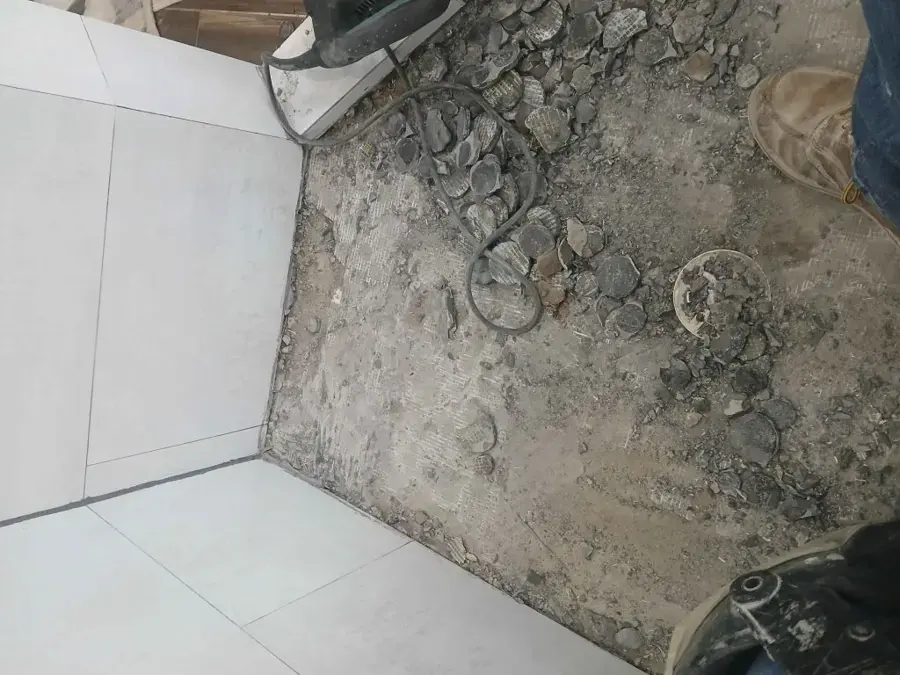
Prosper grew fast, and most of its houses are recent builds on concrete slabs. The supply and drain pipes in those houses run in and under the floor, so a leak can soak a slab for weeks before a stain ever shows.
Key takeaways
- Prosper grew from 2,097 residents in 2000 to 30,174 in 2020, so most homes are recent builds on post tension concrete slabs.
- Blackland Prairie clay swells when wet and shrinks in a drought, and the slab moves with it and stresses the pipes in and under it.
- A warm or damp patch of floor, cracked tile, wet baseboards or a water meter that keeps moving with every fixture off can all point to a slab leak.
- A plumber finds and repairs the leak, and the drying team then removes wet flooring and dries the slab and the walls beside it.
- Moisture readings, not the calendar, decide when a slab is dry enough for new flooring.
Why Prosper slabs and clay put pipes under stress
Two local facts help explain why slab leaks happen here: how the houses were built and what they sit on.
A town of recent builds
Prosper counted 2,097 residents in the 2000 census, 9,423 in 2010 and 30,174 in 2020. Old Town Prosper, around Broadway Street and Coleman Street, is the railroad era core, and most of the homes that came with the growth since then are large one and two story houses on post tension concrete slabs.
The pipes inside a house like that run in and under the slab, where they cannot be reached without breaking concrete.
Clay that will not sit still
The soil under Prosper is Blackland Prairie clay. It swells when it is wet and shrinks in a drought.
The slab moves with the clay, and the movement stresses the supply and drain pipes in and under it. Over time a joint can pull apart or a pipe can crack, and a slab leak begins.
Warning signs of a slab leak in Prosper
A slab leak rarely starts with a puddle. The first clues are small and easy to explain away.
Any one of the signs below is enough to check the water meter and call a plumber. A leak that has already soaked the floor is the job of slab leak water damage restoration in Prosper.
- A warm or damp patch on the floor, sometimes felt through bare feet before it is seen.
- Cracked tile or grout that stays dark or wet.
- Wet baseboards, or paint that bubbles low on a wall.
- A musty smell in a room with no visible water.
- The sound of water running in a wall or floor when nothing is in use.
- A water meter that keeps moving with every fixture off.
- A water bill that climbs with no change in habits.
Supply leak or drain leak
The pipe that leaks changes what the water looks like and how the cleanup is done.
Water under a slab does not stay put. It follows cracks, control joints and pipe openings, and it wicks sideways into walls and cabinet bases.
A leaking supply pipe
Supply pipes hold pressure, so a leak keeps flowing day and night. That is why the meter keeps moving, and why a leaking hot water pipe can warm a patch of the floor.
A leaking drain pipe
A drain pipe leaks only while water runs through it, so a damp patch may appear after a shower or a load of laundry. Water from a drain pipe is not clean, so the drying team handles the wet materials with more care.
What to do in the first hours
A slab leak calls for a plumber and a drying team, and the two jobs go better when they are planned together.
- Shut off the main water valve if the meter keeps moving.
- Write down the meter reading, then read it again later to see whether it moved.
- Photograph the damp spot and any cracked tile with the date visible.
- Move rugs, boxes and furniture off the wet area.
- Keep children and pets off a floor that is wet.
- Call a plumber to find the leak and a restoration team to begin drying.
How the drying team handles a slab leak
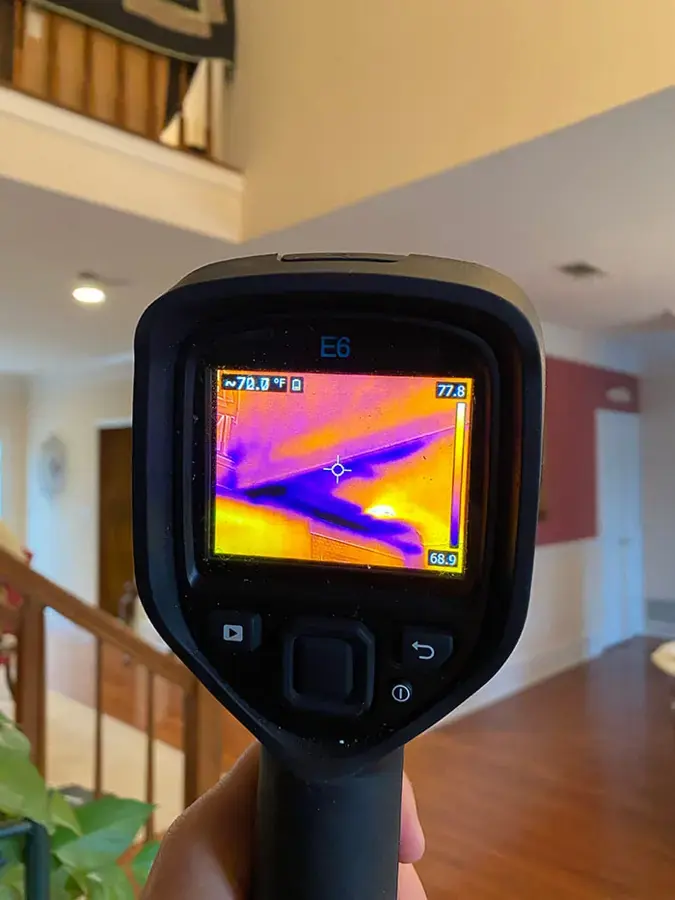
The plumber finds and repairs the pipe first. The drying team then traces how far the water traveled with moisture readings and thermal images.
If water pooled on the surface, water extraction comes first so the slab is not left sitting in it.
Flooring over the leak, such as tile or wood, is often lifted so the slab can release its moisture. Baseboards and the bottoms of wet walls come out when the readings stay high.
Low grain refrigerant dehumidifiers pull water out of the air, and desiccant units and drying mats pull it out of hardwood and the slab. Structural drying continues until the readings sit within 2 to 4 points of a dry reference.
- Carpet and pad over a wet slab are usually removed.
- Tile or wood over the leak is lifted so the slab can dry.
- Baseboards and wall bottoms are opened where readings stay high.
- Cabinet bases are dried in place when the readings allow it.
How the plumber reaches the pipe
A plumber can break out a section of the slab to reach the pipe, or reroute the supply through the walls or the attic and abandon the leaking run. The choice depends on where the leak sits and what else runs nearby.
Why drying starts early
Drying equipment can run while the plumber works. A wet slab keeps feeding moisture into the rooms around it until it is dry, so waiting only lengthens the job.
Costs, claims and getting back to flooring
Slab leak drying typically runs $1,200 to $3,000 when a leak is caught early and $3,000 to $7,500 when tile or wood has to come up. A leak that has run for a long time and soaked many rooms costs more.
Insurance coverage depends on the policy and on what failed. Some policies treat the water damage and the cost of reaching the pipe differently, so the wording decides.
A written drying log and dated photos give the adjuster the same picture the drying team sees.
After the repair: watch the meter and wait for dry readings
The meter is the simplest check that the repair held. If it still moves with every fixture off, another leak remains.
New flooring waits for dry readings, because tile or wood laid over a damp slab can lift, stain or smell.
- Read the meter again after the plumber finishes.
- Keep the drying log until the flooring is back.
- Call back about new cracks, damp spots or smells right away.
Questions
What does a slab leak look like in a Prosper home?
Often it looks like nothing at first. The usual clues are a warm or damp patch of floor, cracked tile, wet baseboards and a water meter that keeps moving with every fixture off.
Can clay soil really break a pipe under a house?
Clay that swells in wet weather and shrinks in a drought moves the slab, and that movement stresses the pipes in and under it. A plumber confirms what caused each leak.
Does a slab leak mean the foundation is failing?
A slab leak is a plumbing problem. Whether the slab itself has moved is a separate question for a foundation or structural specialist.
How long does a wet slab take to dry?
It depends on the size of the wet area and the flooring above it. One or two rooms often take three to five days of readings, and hardwood or a large wet slab takes longer.
Does homeowners insurance cover a slab leak?
Coverage depends on the policy and on what failed. Many policies handle the resulting water damage differently from the cost of repairing the pipe, so the policy wording decides.
Who fixes the leak, the plumber or the restoration team?
The plumber finds and repairs the pipe. The restoration team removes wet materials and dries the slab and walls so new flooring does not go over moisture.