Structural Drying and Dehumidification in Prosper, TX
Surfaces dry fast, but framing, subfloor and slab hold water for days. The drying team sizes equipment to each room and logs readings until every material is truly dry.
(888) 527-9134Call about Prosper structural drying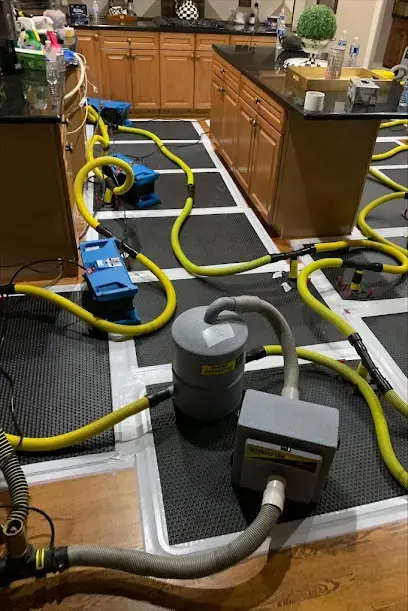
First steps for structural drying and dehumidification in Prosper
Leave the equipment on
Air movers and dehumidifiers work around the clock; switching them off slows the drying.
Keep doors and windows closed
The drying team sets the room as a closed drying chamber, and outside air fights the dehumidifiers.
Keep the room warm
Normal indoor temperatures help evaporation; avoid turning the thermostat far down.
Leave the marked spots alone
The readings come from the same marked points every day, so leave tape and marks in place.
Structural drying is the part of a water loss nobody sees and everybody pays for when it is skipped. Drywall can feel dry while the framing behind it is still wet, and a slab can hold water for days under a floor that looks fine. The drying team maps the moisture, sizes the equipment to each room's evaporation load and keeps it running until the readings say dry, not until the surface looks dry.
What does structural drying and dehumidification cost in Prosper, TX?
Structural drying in Prosper, TX typically runs $1,000 to $6,000, set mostly by the number of rooms, the class of loss and how many days the equipment runs. Hardwood and slab drying sit at the higher end.
One or two rooms
- Class 1 or 2 loss
- Air movers and an LGR unit
- Three to five days of readings
Several rooms
- Class 2 or 3 loss
- Wall cavities and ceilings
- Daily psychrometric logs
Hardwood or slab
- Class 4 materials
- Desiccant units and mats
- Longer drying time
Ranges are typical, not a quote: the water category, square footage, material class and how fast drying started move the number most. Run the Prosper water damage cost calculator for a closer range.
How structural drying and dehumidification is handled in Prosper
The tech who does the walkthrough maps moisture before any equipment goes down, and the equipment stays until the readings say dry.
Map and set the goal
Meters and thermal imaging map the wet area, and a dry reference reading sets the goal.
Size the equipment
The class of loss sets how many air movers and which dehumidifiers each room needs.
Monitor daily
Readings at marked points and psychrometric logs track the drying every day.
Confirm dry and remove
Equipment leaves only when every material reads within 2 to 4 points of the reference.
The science behind the setup
Drying is evaporation plus dehumidification. Air movers sweep moist air off wet surfaces, and dehumidifiers pull that moisture out of the air before it soaks back in. The class of loss decides the setup:
- Class 1: part of a room, mostly low-porosity materials
- Class 2: a whole room, with carpet and wall bottoms wet
- Class 3: water from above, with walls soaked high and ceilings wet
- Class 4: dense materials like hardwood, plaster and concrete that need special drying
LGR dehumidifiers handle most rooms. Desiccant dehumidifiers take over for Class 4 materials and for drying a slab, where very dry air pulls water out of the concrete.
Need a Prosper home dried right?
24/7 dispatch for Prosper, weekends and holidays included.
Hardwood, slab and wall cavities
Many Prosper homes have hardwood or engineered wood over a concrete slab, and tile across large open rooms. Drying mats draw water out of hardwood through the surface. Wall cavities get air through small openings along the bottom, and cabinets get their toe kicks pulled so air reaches the floor beneath them.
The tech who does the walkthrough takes a dry reference reading from an unaffected part of the same home. The drying goal is every wet material reading within 2 to 4 points of that reference.
Daily readings and the claim file
Every day, the drying team records temperature, relative humidity and moisture readings at the same marked points. Those psychrometric logs show the adjuster that the drying worked and why the equipment stayed as long as it did. The Energy Saver pages from the Department of Energy explain how humidity and air movement affect a home, and the EPA indoor air quality pages cover moisture control indoors.
Structural drying and dehumidification across Prosper and nearby towns
Prosper Water Damage Restoration covers ZIP 75078 across Prosper, from Old Town Prosper along Broadway Street out to Windsong Ranch, Star Trail, Whitley Place, Gentle Creek Estates and the homes along Preston Road and the Dallas North Tollway.
Nearby coverage reaches Frisco, Celina, Little Elm, McKinney and Allen.
Related water damage services in Prosper
Structural Drying and Dehumidification questions in Prosper, TX
Why does the equipment stay after the floor feels dry?
Framing, subfloor and slab hold water after surfaces feel dry. The readings, not the feel, decide when the equipment leaves.
What is an LGR dehumidifier?
A low grain refrigerant dehumidifier pulls more water out of the air than a household unit, even at lower humidity, which keeps the drying moving.
When is a desiccant dehumidifier used?
For dense Class 4 materials like hardwood and concrete, where very dry air is needed to pull water out of the material.
Can hardwood floors be dried in place?
Often, if drying starts quickly. Drying mats pull water out through the surface, though badly cupped boards may need replacement after they dry.
How long does structural drying take?
A contained Class 1 loss usually dries in three to five days. Hardwood, slab and Class 3 losses take longer.
Is the equipment loud?
Air movers and dehumidifiers run continuously and make steady noise. The drying team places them to keep main rooms usable where possible.
Still damp after a leak? Get it dried to standard.
Hidden moisture in framing and slab keeps causing damage after the surface dries. The drying team runs the readings until it is truly dry.
(888) 527-9134Prosper drying team, 24/7