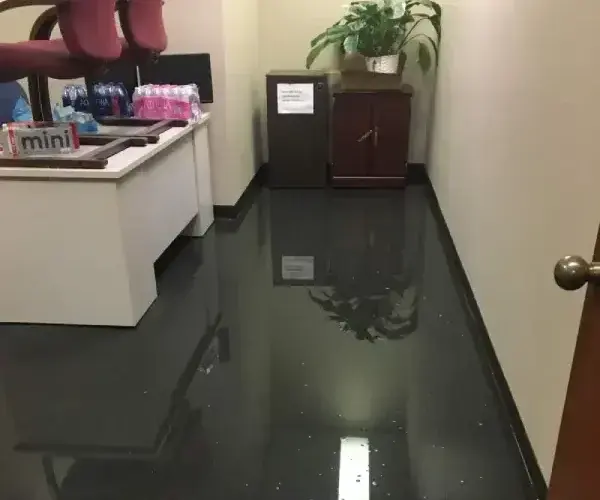
A leak in an office suite or a shop stops work the moment the water reaches carpet, stock or equipment. In Allen, where offices, outlets and food halls sit along the US 75 and SH 121 corridors, speed and clear records protect more than the floor.
Key takeaways
- Allen's destinations along US 75 include Watters Creek, The Village at Allen and Allen Premium Outlets, and the SH 121 corridor includes The Farm and The HUB food hall.
- Allen EDC says employers are concentrated in financial services and insurance, information, technology, professional services, telecommunications and electronics.
- Phased drying lets a business keep part of its space open while the wet part is dried.
- Stock, records and equipment come first, because they cannot be dried or replaced as easily as drywall.
- Photos, readings and receipts kept for the landlord and the insurer protect the claim.
Allen's commercial mix
Allen's 2045 Comprehensive Plan names Watters Creek, The Village at Allen and Allen Premium Outlets as key destinations along US 75. The SH 121 corridor includes The Farm, a mixed use development, along with townhome and urban residential units and The HUB food hall and event venue.
Allen EDC says employers are concentrated in financial services and insurance, information, technology, professional services, telecommunications and electronics. It also says multiple fiber providers and redundant power have led to a concentration of enterprise data centers in Allen.
Because those fields depend on computers and records, a leak above a work area can stop output even when little drywall is wet. Water near server equipment is an electrical hazard, so power is isolated by a qualified electrician before anyone dries the area.
What a leak does to a commercial space
Offices and shops hold carpet, drywall partitions, ceiling tiles, stock and equipment, so a leak moves through more material than it does in a house.
Business losses add a second clock: every day a suite stays closed is a day without sales or billable work.
- Ceiling tiles and insulation absorb water and drop onto desks and stock.
- Carpet and carpet pad hold water and keep it against the walls.
- Drywall partitions wick water upward from a wet floor.
- Shared walls and ceilings carry water into the next suite.
- Electronics, files and inventory are the quickest losses to count.
Supply and sprinkler pipes
A burst supply pipe or a damaged fire sprinkler pipe can release a large volume of water in a short time, and it often runs through ceilings into several suites.
Roofs and rooftop units
Flat roofs and rooftop air units can leak into ceiling tiles and onto desks, often during storms.
Drains and restrooms
A blocked drain or an overflowing restroom fixture can send water across a shared floor, and sewage needs its own Category 3 response.
Phased drying so the doors stay open
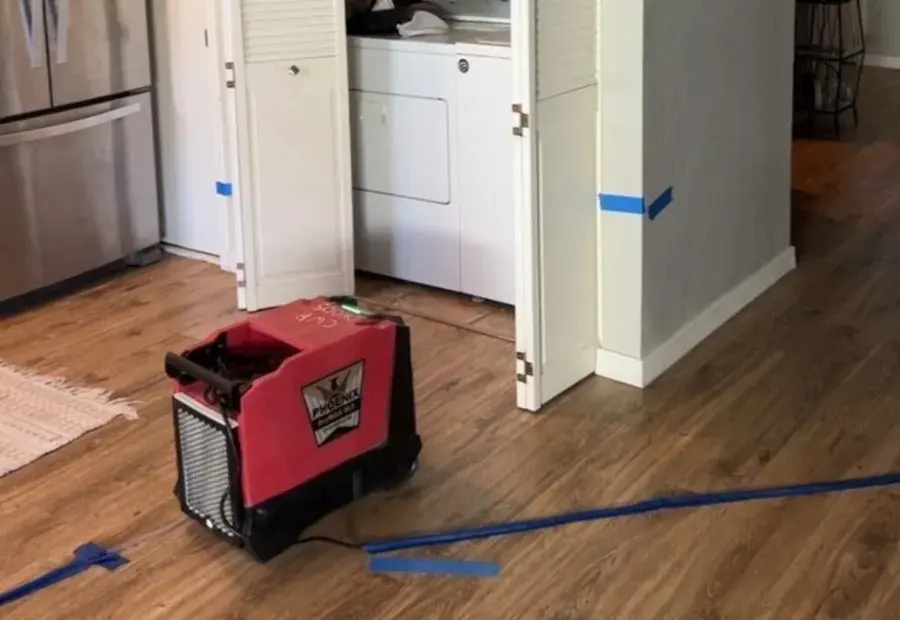
Commercial water damage work is planned around the business. The drying team splits the space into zones, dries the wettest zone first and moves equipment as the readings improve.
Containment walls and air scrubbers can keep dust and moisture away from the part of the space that stays in use.
A shop can often keep its sales floor open on the dry side of a containment wall, and an office can keep desks in use in zones that are already dry.
Wet floors are slippery and wet ceilings can fall, so affected areas are marked off before work starts.
- Zone the space by how wet each area is.
- Dry the wettest zone first.
- Move equipment as the readings improve.
- Schedule noisy work around the hours the business keeps.
Protecting stock, records and equipment
Contents are moved before drying begins, because anything left on a wet floor keeps absorbing water.
Paper records need quick attention. Wet files are separated and dried, and anything irreplaceable is flagged for specialty drying.
- Move stock and files off wet floors and away from drips.
- Raise furniture and equipment on foam or plastic blocks where moving it is not possible.
- Cover shelves and equipment with plastic when water is dripping from above.
- Photograph everything before it is moved.
- Have an electrician or the building engineer switch off power to wet areas.
- Keep a list of damaged items with photos.
- Leave wet electronics unplugged until a technician checks them.
Older retail and light industrial space
Allen's 2045 Comprehensive Plan describes Main Street on the east side of Allen as mainly aging neighborhood service and retail. It says the part of Greenville Avenue south of Main Street has light industrial, distribution and some commercial uses, many of them aging.
A leak in an older building can run unseen in a ceiling space or behind a wall, and a vacant unit can leak for days before anyone notices. Moisture readings and thermal images find where the water went.
In older buildings, leaks often come from aging roofs, rooftop units and supply pipes, so the source is traced before the drying plan is set.
- Look above ceiling tiles for stains and sagging after storms.
- Check rooftop units and roof drains when rain is forecast.
- Check restroom supply hoses and flush valves for slow drips.
Landlord, tenant and insurer
A leak in a building with several tenants involves the tenant, the landlord and each insurer, and each wants dated photos, readings and receipts.
Structural drying in Allen readings show when each suite is dry, which tells everyone when repairs can start.
Multi tenant buildings share ceilings, walls and risers, so the first call goes to the property manager, who can shut a riser without stopping the whole building.
Tenants can read the lease language on who handles damage to the space and to contents, and landlords keep records of roof and pipe maintenance.
- The tenant reports the leak to the landlord or property manager in writing.
- The landlord shuts off the source and warns neighboring suites.
- Each party keeps its own photos and receipts.
- The drying log is shared with every insurer.
Costs and planning ahead
Commercial drying typically runs $3,000 to $8,000 for a single suite and $8,000 to $25,000 for several suites or a full floor. Contaminated water or a large floor area costs more.
A short plan kept near the shutoff valve saves time: where the valve is, who to call and where stock goes first. Allen water damage restoration covers commercial losses 24/7.
Commercial jobs run on a plan agreed with the property manager: which zones dry first, when equipment will be loud and who signs off on each stage.
- Mark the main water shutoff and each suite shutoff.
- Keep a call list for the landlord, the property manager and the drying team.
- Store stock and files off the floor in rooms below plumbing.
- Photograph the source of the water and the shutoff before leaving the space.
Questions
How does a business stay open during drying?
The drying team works in zones, dries the wettest area first and uses containment so part of the space stays in use.
What should be moved first after a leak in a shop?
Stock, files and electronics come first, because they are the hardest to replace and cannot be dried like drywall.
Who pays for water damage in a leased office?
The lease and the insurance policies decide. Tenants and landlords each keep dated photos, readings and receipts.
Can a leak in the next suite damage another suite?
Yes. Water follows shared walls and ceilings, so each affected suite gets its own readings.
How long does commercial drying take?
It depends on the size of the wet area and the materials involved. Readings, not the calendar, show when a suite is dry.
What is different about drying a commercial space?
Commercial work usually involves more material, more people and a schedule built around business hours, so it is phased and documented for a landlord and several insurers.