Structural Drying and Dehumidification in Little Elm, TX
Drying is run by moisture readings, not by the calendar, so the Little Elm crew sets LGR dehumidifiers, air movers and desiccant units and adjusts them until every material reads dry.
(888) 527-9134Call about Little Elm drying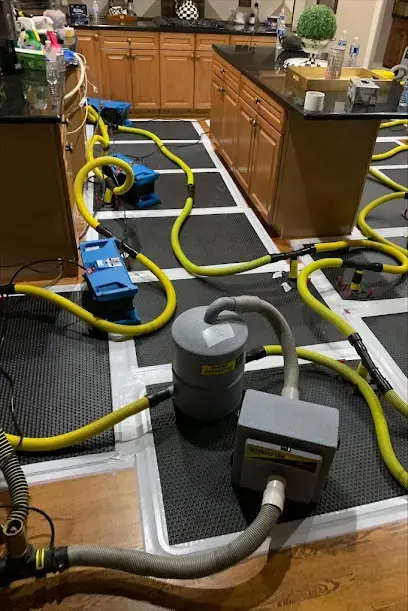
First steps for structural drying and dehumidification in Little Elm
Keep the air warm
A comfortable indoor temperature helps, since cold air holds less moisture and slows drying.
Leave equipment alone
Do not switch drying equipment off or move it, because placement is set by the readings.
Open cabinets and doors
Open closet doors and cabinet doors so dry air can reach the wet surfaces behind and below them.
Keep the logs
Photograph the equipment and keep the daily reading sheets, since they support the claim.
A room can look dry long before it is. Wood, drywall, concrete and insulation hold water inside them, and leaving that moisture in place invites swelling, warping and mold. Structural drying treats the building as a system, measuring temperature, humidity and material moisture and adjusting equipment until the readings match a dry reference, which is the approach in the IICRC S500 standard.
What does structural drying and dehumidification cost in Little Elm, TX?
Structural drying in Little Elm usually costs $1,000 to $6,000, with one or two rooms at the low end and several rooms with wall cavities and ceilings higher, while hardwood or slab drying passes $6,000.
A room or two
- Light to moderate wetting
- Air movers and one LGR unit
- Daily readings through dry
Several rooms
- Class 2 or 3 loss
- Wall cavities and ceilings
- Psychrometric logs each day
Hardwood or slab
- Dense Class 4 materials
- Desiccant units and mats
- A longer drying run
Ranges are typical, not a quote: the water category, square footage, material class and how fast drying started move the number most. Run the water damage cost calculator for a closer range.
How structural drying and dehumidification is handled in Little Elm
The tech who does the walkthrough maps moisture before any equipment goes down, and the equipment stays until the readings say dry.
Map and classify
Meters and a thermal camera find wet materials, and the loss is classed by how much water they hold.
Set the equipment
LGR dehumidifiers, air movers and desiccant units are sized and placed to the readings and room layout.
Monitor every day
Temperature, humidity and material moisture are logged daily, and equipment moves when a reading stalls.
Confirm dry and remove
Equipment comes out once materials match the dry reference, and the logs go into the file.
What a drying setup includes
Each part of the setup has a job, and the crew chooses and places them by the readings, not by a fixed formula, in a humid subtropical climate like Little Elm's:
- LGR dehumidifiers that pull water vapor out of the air in normal conditions
- Desiccant units for cold, dense or very wet materials such as concrete
- Air movers that push dry air across floors, walls and ceilings
- Drying mats and injection hoses for hardwood and wall cavities
Thermal cameras and moisture meters find the wet spots at the start, and the same tools prove the materials are dry at the end.
Need drying that follows readings?
24/7 dispatch for Little Elm, weekends and holidays included.
How long drying really takes
Drying is run by readings, not the calendar. A small clean-water loss on carpet may finish in three to five days, while hardwood, plaster, concrete or a long-soaked wall can take much longer, and the equipment stays until the last reading reaches the dry goal.
The drying time estimator gives a typical range from the loss size and materials, and the daily logs turn that estimate into a real finish date.
Hardwood, slab and wall cavities
Hardwood and concrete dry slowly because they release moisture from deep inside, so the crew uses drying mats on the floor and desiccant units that keep working in cool air, while wall cavities get small holes or removed baseboards so dry air can reach the framing. A slab leak loss is the usual example, where the concrete is the last material to dry.
Structural drying and dehumidification across Little Elm and nearby towns
Drying work in Little Elm covers ZIP codes 75068 and 76227, from Lakeside Estates, Valencia on the Lake, Hillstone Pointe and Spiritas Ranch to the restaurants and apartments around The Lakefront and homes near Union Park.
The same service nearby: structural drying and dehumidification in Prosper, Frisco, Celina.
Water damage restoration in Little Elm › Every town covered ›
Related water damage services in Little Elm
Structural Drying and Dehumidification questions in Little Elm, TX
Why do dehumidifiers run so long?
Materials release water slowly, and the equipment only stops when moisture readings show wood, drywall and concrete have reached the dry goal, which can take longer than the surface suggests.
Will drying raise the electric bill?
Yes, the equipment draws power while it runs, so equipment logs and run times are worth keeping if the electricity cost is part of a claim.
Can drying start before the leak is repaired?
Standing water has to be extracted and the source stopped first, but drying equipment can run while the plumber works, which keeps the structure from staying wet longer.
Is it normal for drywall to be cut during drying?
Yes when insulation or framing behind it stays wet, because a small opening or removed baseboard lets dry air reach moisture that would otherwise stay trapped.
How is drying different in a humid climate?
Humid air slows evaporation, so dehumidifiers do more of the work and doors and windows stay closed, which is why Little Elm's humid subtropical climate matters to equipment choices.
Dry the building, not just the surface
Share what flooded or leaked and which rooms are wet, and the Little Elm drying team will set equipment by the readings and log every visit until the dry goal is met.
(888) 527-9134Call for drying help