Structural Drying and Dehumidification in Celina, TX
Wet framing, subfloor and drywall dry on a schedule set by readings, not a calendar. The drying team places equipment by class and logs the numbers every day.
(888) 527-9134Call for Celina structural drying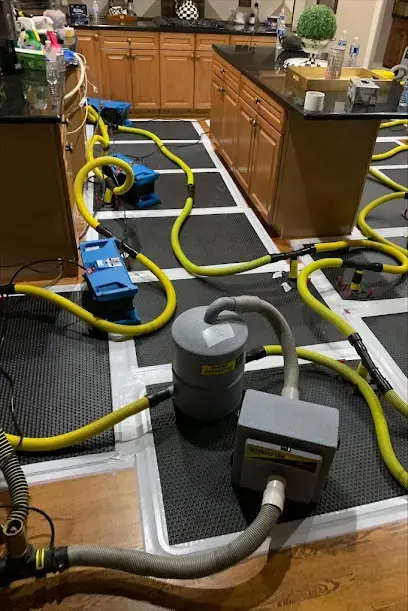
First steps for structural drying and dehumidification in Celina
Extract first
Standing water is removed before equipment is set, because drying cannot keep up with liquid water.
Read and classify
Meters and thermal images set the loss class and water category and mark where moisture hides.
Place the equipment
Dehumidifiers, air movers and mats go in by class, and wall cavities are opened where air must reach.
Check every day
Daily readings steer moves and removals until each material reaches its dry goal.
About 82.3 percent of Celina homes were built in 2000 or later, and 10,805 of the 11,152 homes are detached houses, so most drying plans cover newer single family houses where drywall, flooring and framing all need to reach a dry goal together. The method does not change with the house, but the readings do.
What does structural drying and dehumidification cost in Celina, TX?
Structural drying in Celina runs from about $1,000 for one or two rooms to $6,000 and up when hardwood, dense materials or a concrete floor need longer drying. Class, room count and run time set the figure.
Light loss, a few rooms
- Small area of wet materials
- Air movers plus an LGR unit
- A few days of readings
Wall cavities involved
- Ceilings and walls wet
- Several rooms in staged setups
- Psychrometric logs each day
Dense floors or slab
- Hardwood, plaster or concrete
- Desiccant units and mats
- Longer run, repeat readings
Ranges are typical, not a quote: the water category, square footage, material class and how fast drying started move the number most. Run the water damage cost calculator for a closer range.
How structural drying and dehumidification is handled in Celina
The tech who does the walkthrough maps moisture before any equipment goes down, and the equipment stays until the readings say dry.
Classify the loss
Moisture readings and thermal images set the class and category and mark the wet boundaries.
Stage the equipment
Air movers and dehumidifiers go in by class, with cavities opened where air must reach.
Adjust each day
Daily readings direct moving, adding or removing units as materials dry at different rates.
Prove the finish
Final readings against dry reference points close the job and go to the owner and adjuster.
How a drying plan is built around the class of loss
The IICRC S500 standard sorts losses by how much material is wet and how quickly it releases moisture:
- Class one: little wet material and slow evaporation
- Class two: a whole room of carpet and wall bottoms
- Class three: water from above, soaking ceilings and walls
- Class four: dense materials such as hardwood, plaster and concrete
- Category: the source, from clean to contaminated, set separately
The class sets how many air movers and dehumidifiers go in, and the category sets whether materials are cleaned and kept or removed, so both are decided before equipment is placed.
Walls still damp after cleanup?
24/7 dispatch for Celina, weekends and holidays included.
Air movers, LGR units and desiccant drying
Air movers push dry air across wet surfaces, LGR dehumidifiers pull the moisture out of that air, and the two work as a pair. Opened wall cavities, lifted baseboards and vented cabinet bases let the air reach moisture that hides behind finishes.
Dense materials need more. Hardwood, plaster and a concrete floor release moisture slowly, so desiccant units and drying mats pull it upward and outward while temperature is held steady. These jobs run longer, and slab leak water damage is a typical example.
Readings that prove the structure is dry
Each visit records temperature, relative humidity and the moisture content of reference materials, which is the psychrometric log. Equipment is moved or removed as the numbers fall, and nothing is closed up on a guess.
The final readings go to the owner and the adjuster as a record that the structure met its goal. A drying time estimator gives a first idea of duration, and the log replaces that estimate as soon as real readings exist.
Structural drying and dehumidification across Celina and nearby towns
Structural drying covers Celina houses and light commercial spaces, including Cambridge Crossing, Creeks of Legacy, Sutton Fields and Villages of Uptown, plus properties along Preston Road (SH 289) in both Collin County and Denton County.
The same service nearby: structural drying and dehumidification in Prosper, Little Elm, McKinney.
Related water damage services in Celina
Structural Drying and Dehumidification questions in Celina, TX
How many days will the equipment run?
Most residential jobs need three to five days, while hardwood, plaster and concrete take longer. Each day's readings show whether the equipment stays or moves.
Why do dehumidifiers matter as much as fans?
Fans move water out of materials into the air, and a dehumidifier removes that water from the air. Without the second step, the moisture settles back into the structure.
Is it normal for the house to feel warm and dry?
Yes. LGR units give off heat and dry the air quickly, so a warm, dry house during drying is a sign the equipment is working.
Does homeowners insurance pay for drying?
Sudden water losses usually include drying, and the adjuster will want the daily logs to confirm the equipment days, so keep every reading the crew records.
Can hardwood be saved after it gets wet?
Sometimes. Drying mats can pull moisture out of boards that are caught early, but cupped or glued hardwood over a wet subfloor is often replaced.
Dry the structure to a measured goal
Dispatch for Celina runs around the clock, and the mitigation team can stage equipment, log the first readings and keep logging until dry.
(888) 527-9134Send drying equipment to Celina