Structural Drying and Dehumidification in McKinney, TX
Water that is out of sight is still in the framing. The drying team places air movers and dehumidifiers from moisture readings and adjusts them until the structure matches a dry reference.
(888) 527-9134McKinney drying equipment help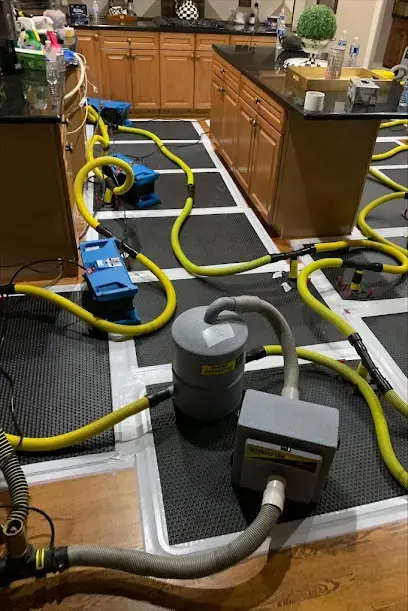
First steps for structural drying and dehumidification in McKinney
Keep the area closed
Shut doors and windows to the affected rooms so outdoor humidity stays out while dehumidifiers work.
Leave equipment running
Equipment is loud, but turning it off between visits lets the structure rewet and stalls progress.
Do not move equipment
Placement follows the readings, so moving units or unplugging cords changes airflow the crew set on purpose.
Keep a log of changes
Note new stains, smells or warped flooring and send photos so the crew can compare them with readings.
Structural drying is the part of a water job that nobody sees working. After the standing water is out, wet drywall, subfloor, framing and flooring still hold moisture that evaporates slowly. Drying equipment speeds that evaporation, and moisture readings decide where to place it, when to adjust it and when the structure is truly dry.
What does structural drying and dehumidification cost in McKinney, TX?
Most structural drying jobs in McKinney run from $1,000 to $6,000, depending on how many rooms are wet and whether cavities or ceilings need dehumidification. Hardwood and other dense materials can pass $6,000 because they hold moisture longer.
One or two rooms
- Light to moderate wetting
- Air movers, one LGR unit
- Readings every visit
Several rooms wet
- Walls and ceilings damp
- Multiple dehumidifiers running
- Psychrometric logs kept
Hardwood and dense materials
- Mats pulling through boards
- Desiccant units added
- Extended equipment time
Ranges are typical, not a quote: the water category, square footage, material class and how fast drying started move the number most. Run the water damage cost calculator for a closer range.
How structural drying and dehumidification is handled in McKinney
The tech who does the walkthrough maps moisture before any equipment goes down, and the equipment stays until the readings say dry.
Read the structure
Meters measure drywall, wood and subfloor, and a thermal camera shows wet areas surface checks miss.
Set the equipment
Dehumidifiers and air movers are placed from the readings, with airflow aimed at wet surfaces.
Check and adjust
Each visit records temperature, humidity and moisture content, and equipment is moved or added as the numbers change.
Confirm and remove
Equipment leaves only when every point matches a dry reference.
Why McKinney's climate matters
McKinney is humid subtropical, and spring is the wettest season, so outdoor air often carries moisture of its own. Closed-up rooms with dehumidifiers dry faster than rooms opened to damp air, which is why doors, windows and containment are managed during a job.
Wet walls or floors in McKinney?
24/7 dispatch for McKinney, weekends and holidays included.
What gets measured
- Moisture content of drywall, wood and subfloor
- Air temperature and relative humidity in each room
- Grains per pound, the moisture the air holds
- Dehumidifier output and equipment run state
- Dry reference readings from unaffected rooms
Psychrometric readings show whether the air can accept more moisture. If humidity stays high the crew adds dehumidification, and if surfaces stall it adds airflow or opens a cavity, so the plan changes with the numbers.
Hardwood, ceilings and wall cavities
Hardwood and engineered floors cup when they stay wet, so drying mats pull moisture through the boards while dehumidifiers take it from the air. Ceilings and wall cavities are dried with air pushed through small holes, and flood cuts are made only where readings refuse to fall.
When the equipment comes out
Equipment stays until every measured point matches a dry reference taken from an unaffected room, not until a surface feels dry. The Environmental Protection Agency points to the 24 to 48 hour mold window, so early drying and clean readings matter. Try the drying time estimator for the factors that lengthen a job.
The final log, with start and end readings for each room, goes to the owner and the adjuster. See water extraction for how the job starts.
Structural drying and dehumidification across McKinney and nearby towns
Structural drying runs in homes and businesses across McKinney, including Tucker Hill, Painted Tree, Trinity Falls and Stonebridge Ranch, in ZIP codes 75069 to 75072 along US 75, SH 5 and the Sam Rayburn Tollway.
The same service nearby: structural drying and dehumidification in Prosper, Allen, Frisco.
Related water damage services in McKinney
Structural Drying and Dehumidification questions in McKinney, TX
How long will the equipment run?
It runs until readings match a dry reference, so the length depends on materials, water type and room size. No fixed number of days applies to every job.
Why are the machines so loud?
Air movers and LGR dehumidifiers move large volumes of air, and that airflow is what lifts moisture out of surfaces. Quieter settings would mean slower drying.
Can the equipment raise the electric bill?
Yes, running several units adds to usage for the duration of the job. The daily log shows how long each unit ran, which helps when discussing it with the adjuster.
Is hardwood always replaced after a leak?
Not always. Early drying with mats can save boards that have not cupped yet, while floors that stayed wet for a long time may need replacement.
What if the drying stops too early?
Damp framing and subfloors can warp materials and cause odors, and walls may have to be reopened. Readings that match a dry reference are the stopping point.
Dry the structure to a measured target
The drying team sets equipment from moisture readings, adjusts it every visit and leaves only when walls, floors and ceilings match a dry reference. Call with the rooms that were wet.
(888) 527-9134McKinney drying equipment help